FIRST TEST

As I took my seat behind that wooden desk on the lower level in 1982, I began my training at Olcott International.

As discussed in numerous posts, Olcott International operates in a highly specialized field, one that most people do not understand.  My Dad had started his business in 1961 on the back of an advanced (for its time) computer program that could sort patent renewal data.

He offered this service to corporate patent owners that had live dockets of hundreds or thousands of registrations. Most of these required annual payments to maintain their validity. (Patents in the USA follow an extremely odd payment schedule, however).  After the 20th year, the patent would come to term and fall into the public domain, meaning that anyone could read the patent, make the thing (whatever it was), and sell it for a buck.

Generally, whenever I met people socially, and the conversation turned to work, describing this computer and legal-driven business quickly became a problem.  Most people have professions that can be easily pigeon-holed in simple terms, like “banker,” “teacher,” or “forklift driver.” Not I. In fact, it got so tedious for me to explain what I did for a living, I would typically bail and offer up that I was simply the hostess’ psychiatrist. Sometimes, I would even be asked if I was taking on new patients. I always made sure that I was available only on the most unsuitable night.

There are patents for all kinds of things. Some vital, like certain AIDS medications. Many are frivolous, like weird ribbing patterns on a condom. Most are a waste of money, patented by individuals for products with no commercial potential.

On the other hand, successful corporations, eg. Apple Computer, have dockets comprising thousands of valuable, revenue generating patents. Every one of them worth the $2,000 annual cost of renewal (thereabouts) annually in over 100 countries across this beautiful planet.

So what was the essence of my first job with Olcott International? Patents? No!

THE NIGHT IS DARK AND FULL OF TERRORS

“What did he fear? It was not fear or dread. It was a nothing that he knew too well. It was all a nothing and a man was nothing too. It was only that and light was all it needed and a certain cleanness and order. Some lived in it and never felt it but he knew it was already nada y pues nada y pues nada. Our nada who art in nada, nada be thy name thy kingdom nada thy will be nada in nada as it is in nada. Give us this nada our daily nada and nada us our nada as we nada our nadas and nada us not into nada but deliver us from nada; pues nada. Hail nothing full of nothing, nothing is with thee.”

-Ernest Hemingway, “A Clean, Well-Lighted Place”

In 1982, Dad was suing Gloria for divorce.  Or more accurately, he forced her to sue him.  As the defendant, he and his lawyers threatened her with an illegal prior divorce and effectively slaughtered her (see my post last week “IS YOUR MEXICAN DIVORCE LEGAL?”).

During that Fall, I started working at Olcott International part-time, one day a week, on Fridays, when I had no classes at Columbia University’s Graduate School of International Affairs (SIA).  It was the last in a string of temporary or part-time jobs held down since my last year of college in 1980.

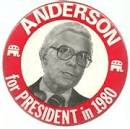
As a college senior, I created a job for myself as an organizer for Teddy Kennedy’s presidential campaign in 1979 and 1980.  Teddy didn’t win, as you recall.  Then, I worked as the New York State College Coordinator for John Anderson’s Presidential campaign in the Fall of 1980.  John didn’t win either.  Later on, at SIA, I had summer jobs at Société Générale and the United Nations.  Great experiences all.

John Anderson

The highlight of my experience in John’s campaign was when he took the time to call me one day to thank me for my efforts.

But now Dad had offered me full-time employment at Olcott International starting January 1983.  This was to be my first time working in a job for a paycheck.  To be supporting myself like a real person.

As mentioned in previous posts, I had my reasons to be nervous.  The puffed-up title of Assistant Vice President did little to assuage my concerns.

IS YOUR MEXICAN DIVORCE LEGAL?

Above: A beautiful view of Cuidad Juárez from El Paso earlier this week.  Photo by DLynne Morin.

By mid-1982, Dad’s marriage with Gloria had devolved into crass posturing for litigation in a divorce action.  After all, he had plenty of experience as he had been through this experience three times already.

The first had been 32 years earlier, in 1950.  His newly wed wife, Pat, returned home one evening to their Beekman Place neighborhood apartment.  As soon as she walked in, Bern hung up the phone.  “Who are you on the phone with, Dear?” she asked.  Oddly, Dad declined to say.  It took her a while to find out and it turned out to be her former best friend Connie Richards.   Pat had the marriage annulled within a few weeks via an expedited petition direct to the Vatican.

Dad never told me anything about his marriage with Pat.  Or Connie Richards, for that matter.  I had to find Pat 60 years later to ask her personally.  Remember, she was wife number one and my Mom was only the second.  Does that make Pat a stepmother?  The English language does not have a term to describe our relationship.

In any event, Pat was very annoyed with Bern (and went on to marry four more times herself).

PAYING THE COST

A reader commented last week “James, you had a very difficult childhood/teenage. Your father obviously had some issues.”

I disagree with the first statement.  Leaving aside the fact that my Dad had divorced and remarried twice by the time I reached my 18th birthday, I think my childhood was often charmed, even privileged.  As you can see from my picture in last week’s post “WHEN A CHORE IS NOT A CHORE PART 2,” Dad and I had a lot of fun together.

The Father who took that picture is the man I miss terribly today.

It was only in my later adolescence that ominous signs about Dad became known to me from the new vibrant presence in our lives, Gloria.  Like any child, I refused to believe at first that my Dad could have had issues.

WHEN A CHORE IS NOT A CHORE PART 2

Oddly, though, within a year or two of marriage to Gloria, Dad took on this disconcerting habit of assigning all kinds of imposing chores to me, typically without any advance notice.  Almost always when I was just about out the door to explore the world and to create my own life as a teenager.

Case in point.  Dad and Gloria built a summer house in Shinnecock Hills in 1973.  It was a prefab Lindal homemade of cedar planks looking more like a Hunter Mountain ski chalet than a tumbledown wood-shingled cottage with white shutters.  No Hamptons-style lawn either; the grounds were entangled with bittersweet vines, nasty and thorny.

On one of our very first weekends there, the lot was still somewhat of a construction site.  I had invited one of my friends over, Dee Dee, to celebrate the move-in by spending the night.  After breakfast the next morning, as we were both getting ready to go to the beach, Dad came over to ask — I mean, insist — that we take two shovels “as strong men” and plough down a huge pile of sand left behind by the excavation of the foundation from the past Spring, when the house was built.

“Huh, what?” I said, looking at the 15 foot high pile.  It was the first weekend of summer and Dee Dee and I were both anxious to go see our seasonal friends after a long school year of drudgery.

“Gloria wants you to do it!” he snapped.  Of course, Gloria and Rosemary never had anything to do with such spontaneous insanity.

Did I mention that Dee Dee and I thought we were on our way to the beach?

WHEN A CHORE IS NOT A CHORE PART 1

After a few months at 974 Boulevard East in 1970, Dad found a new location for both his residence and the offices of Olcott International.  It was in a triple decker, similar to the millions that form the housing stock of Boston and environs.  But unlike the wooden ones in Massachusetts, this was constructed out of gold brick.  According to Dad, there were three layers of outer walls.  No wolf was ever gonna blow that house down!

It was on Weehawken’s eponymous Hamilton Avenue, the road atop the cliffs.  Across the street from the house, the cracked sidewalk and the rusting iron wrought fence gave way to an expansive view of the Hudson River and the west side of Manhattan.

Dad rented the first floor for the office and staked out the top floor, the third, as the residence.  The landlord lived in the apartment on the second, sandwiched, as it were, by Olcott rentals.

For years, Dad had rented bachelor style accommodations in New York and then in New Jersey when he moved to 974 Boulevard East.  No more.  The third floor was like the Taj Mahal in terms of spaciousness compared to the cramped quarters of times past.  There were multiple bedrooms, a central hall as well as separate living and dining rooms.  As this was the top floor, the ceiling everywhere was gabled into sharp points.

And yes, there was a kitchen!  A real one!

MY DAD’S BUDDHIST WEDDING!!

In 1983, Rosemary Egan was a nimble 32 year old brunette who worked the rigging (or the galley) as a crewmember of a 282 foot Windjammer sailing vessel that plied the aqua waters of the Bahamian outer banks.  This was not just any sailing vessel, but a real barkantine, a three-masted ship, square-rigged on the foremast and fore-and-aft-rigged on the other masts.  Up to 30 guests paid for the privilege of waking up in cabins to the sound of sea birds, feasting on lobster, hammocking in the rigging, cannonballing into the ocean and participating in the sailing.

When not hoisting a jib, Rosemary could be found singing and dancing in off-off-Broadway productions.  Show tunes were a specialty of hers.  And if not sailing, singing, or dancing, she had a steady part-time gig as a Medical Assistant.  It’s good to have multiple options.

You could say that she fit a certain profile.

One day after completing a cruise, she was waiting in line to check her luggage at Nassau International Airport for a return flight to Newark, New Jersey.  Born in New York City, she had moved with her folks to Plainview, New Jersey as a youngster during the exodus out of the city proper in the 1960s and 1970s.  Please see my posts “THE END OF AN ERA” and “WELCOME TO NEW JERSEY.”

As she struggled to move her luggage towards the check-in, a handsome stranger who resembled Jack Lord of Hawaii 5-O stepped in to help.  He was awfully chatty and his eyes lit up when he learned that she was part of the crew for Windjammer cruises.  He lifted her bag onto the check-in scale with utmost care and she watched her bag carted away into oblivion as it was promptly lost by the airline for days.  It was an omen of things to come.

HEARTBREAKER

July and August 1992 were interesting times at Olcott International.  I was busy coordinating marketing activities with fellow employee Peggy.  My sister Blair also joined the company for a couple of weeks as she was out of college for the summer; I welcomed her company in yet another attempt to curtail or document Dad’s occasional onslaughts of wild behavior.

Like the time in July 1989 out of the blue one morning he assigned at the last minute a “chore” for me: move 25+ heavy (40 pounds each) 3 x 3 stacks of heavy tiles around the family summer house in Shinnecock Hills, Long Island.  It was beyond my ability.  But no matter.  Later that afternoon, he hunted me down at a friend’s house by telephone to tell me I was disinherited.

Dad was like that.  Apparently, it ran in the family.  Remember my Uncle Ed who out of the blue would also assign overbearing tasks to my cousin Billy and berate him if left uncompleted?

But back to Peggy.  She was a good soul who had a lot of previous experience with legal software and easily did her share of (in this case appropriate) heavy lifting in terms of marketing and support.  At the time, Olcott International sold various versions of patent management software, including ones for DOS, Windows, and Mac!  I learned, and trained clients in, all of them.

The Mac version was a real curiosity.  No one else had it!  Apple’s patent department in Cupertino was definitely intrigued; apparently, they were managing their patent data on a Windows platform, much to their and Steve Jobs’ chagrin.

But in the middle of this patent management business drama appeared a man much like Huntington Hartford or Bobby Edwards.  Out of the blue and completely unexpected.

But in this case, Dr. Wilson Greatbatch was the real deal.  An inventor’s inventor.  The man who had created the pacemaker and who was now going to cure AIDS.  What was he doing in the Weehawken, New Jersey offices of Olcott International?

FROM HAWAI’I WITH LOVE

Notifying a distant family member of the passing of one of their own in the Aloha State is one of the least favorite tasks of the Office of the Chief Medical Examiner of Honolulu County, Hawai’i.  It’s typically done by telephone; calls are made in the morning local time to account for the time difference back on the mainland.

The script is very simple and to the point.  “This is Betty from the Medical Examiner’s Office in Honolulu, Hawai’i.  Mr. Olcott, I’m very sorry to inform you that your brother has died here in Hawai’i.”

In Edward Olcott’s passing, an additional explanation was necessary.  “Your brother passed away last week.  I apologize for the delay in notifying you but we were unable to identify your brother because he expired on the street and was found without any identification.  We surmise that his wallet was stolen when he died.  We had to send his fingerprints to the FBI and we just got the results back this morning.”

Next are the questions about medical history.  “Did your brother suffer from heart disease?  Did he use drugs?”  These are used to confirm the autopsy results.  In Ed’s case, it was a heart attack.

Finally, the key question.  “How will you be taking care of funeral arrangements?”
Now that involves potential cost to the family member answering the phone.  Bernard Olcott never liked to be left with the bill.  He liked it least of all when stuck with the check from the person he had fought so much over so little.  His own brother.

DEATH IN HONOLULU

There is a good reason why the Bernard Olcott Story, every so once in a while, makes a reference to the Aloha State.

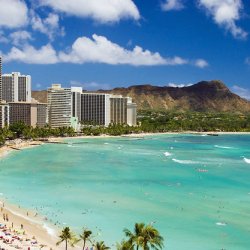
On a late July 1977 morning, a slight man woke up in his modest efficiency apartment near Waikiki, the tourist district of Honolulu.  He was 61 years old, somewhat gaunt, barely five foot seven.  Wrinkles of a hard life lined his face as he switched on the radio after leaving his bed.  The weather forecast came on, as if it were the news.  For Honolulu it isn’t, since the weather is always the same, day in, day out.  Highs will be in the low 80s, lows in the middle 70s.  Winds are “trade.”  Winds are always trade in Hawai’i (unless a cyclone comes to visit, of course.)

The weathered man had lived some thirty years previous at 3169 Alika Avenue in the Nu’uana – Punchbowl neighborhood, an up country residential district.  The previous week, he had decided to travel from his current home in Exeter, New Hampshire to come back here to retrace his steps as a young naval officer and maybe plumb his soul.  It’s about the longest trip you can make in the USA and still remain in the land of the free.

He found himself later that morning on Ala Moana Boulevard wandering alone in the sunshine on Wednesday, the 26th of July in 1977.  As Honolulu is the southern-most metropolis in the nation, at these latitudes, the sun can cause a bad sunburn in as little as 15 minutes.  The fair skin of a new arrival from Northern New England is at particular risk.

The man stopped in his tracks, his pace suddenly unsteady.  As he wiped the sweat off his forehead, the traffic swirled around him and he became disoriented.  It wasn’t the bright sun that had gotten to him, but a sharp pain in his upper chest.  He gripped himself, but could only stagger forward and reach out vainly with his free arm.  When he dropped to the pavement, he cut his face on the sidewalk.  His last sight on this planet was the passing traffic – buses, trucks, cars – from ant level.

As the dying man went down, passersby unknown took advantage of his incapacity, rapidly relieving him of his wallet, cash, and watch.  By the time help arrived, the corpse on the sidewalk could no longer identify himself.

The Honolulu County Medical Examiner later that day fingerprinted “John Doe.”  A match came back the next day – from military records.

The man’s name was