FROM HAWAI’I WITH LOVE

Notifying a distant family member of the passing of one of their own in the Aloha State is one of the least favorite tasks of the Office of the Chief Medical Examiner of Honolulu County, Hawai’i.  It’s typically done by telephone; calls are made in the morning local time to account for the time difference back on the mainland.

The script is very simple and to the point.  “This is Betty from the Medical Examiner’s Office in Honolulu, Hawai’i.  Mr. Olcott, I’m very sorry to inform you that your brother has died here in Hawai’i.”

In Edward Olcott’s passing, an additional explanation was necessary.  “Your brother passed away last week.  I apologize for the delay in notifying you but we were unable to identify your brother because he expired on the street and was found without any identification.  We surmise that his wallet was stolen when he died.  We had to send his fingerprints to the FBI and we just got the results back this morning.”

Next are the questions about medical history.  “Did your brother suffer from heart disease?  Did he use drugs?”  These are used to confirm the autopsy results.  In Ed’s case, it was a heart attack.

Finally, the key question.  “How will you be taking care of funeral arrangements?”
Now that involves potential cost to the family member answering the phone.  Bernard Olcott never liked to be left with the bill.  He liked it least of all when stuck with the check from the person he had fought so much over so little.  His own brother.
DEATH IN HONOLULU

There is a good reason why the Bernard Olcott Story, every so once in a while, makes a reference to the Aloha State.

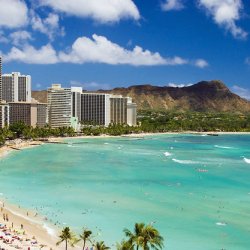
On a late July 1977 morning, a slight man woke up in his modest efficiency apartment near Waikiki, the tourist district of Honolulu.  He was 61 years old, somewhat gaunt, barely five foot seven.  Wrinkles of a hard life lined his face as he switched on the radio after leaving his bed.  The weather forecast came on, as if it were the news.  For Honolulu it isn’t, since the weather is always the same, day in, day out.  Highs will be in the low 80s, lows in the middle 70s.  Winds are “trade.”  Winds are always trade in Hawai’i (unless a cyclone comes to visit, of course.)

The weathered man had lived some thirty years previous at 3169 Alika Avenue in the Nu’uana – Punchbowl neighborhood, an up country residential district.  The previous week, he had decided to travel from his current home in Exeter, New Hampshire to come back here to retrace his steps as a young naval officer and maybe plumb his soul.  It’s about the longest trip you can make in the USA and still remain in the land of the free.

He found himself later that morning on Ala Moana Boulevard wandering alone in the sunshine on Wednesday, the 26th of July in 1977.  As Honolulu is the southern-most metropolis in the nation, at these latitudes, the sun can cause a bad sunburn in as little as 15 minutes.  The fair skin of a new arrival from Northern New England is at particular risk.

The man stopped in his tracks, his pace suddenly unsteady.  As he wiped the sweat off his forehead, the traffic swirled around him and he became disoriented.  It wasn’t the bright sun that had gotten to him, but a sharp pain in his upper chest.  He gripped himself, but could only stagger forward and reach out vainly with his free arm.  When he dropped to the pavement, he cut his face on the sidewalk.  His last sight on this planet was the passing traffic – buses, trucks, cars – from ant level.

As the dying man went down, passersby unknown took advantage of his incapacity, rapidly relieving him of his wallet, cash, and watch.  By the time help arrived, the corpse on the sidewalk could no longer identify himself.

The Honolulu County Medical Examiner later that day fingerprinted “John Doe.”  A match came back the next day – from military records.

The man’s name was

LAST CALL FOR EDWARD

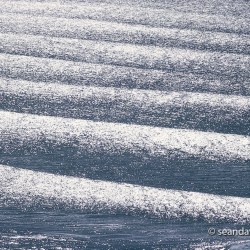
Sun.  Sea Spray.  Hull smashing through rows of swells.  The ship’s deck heaving from and dropping into an endless parade of oncoming waves.  Turn your face towards the sun and catch a million dancing reflections on the water glistening back at you.

If you’re on a sailboat, there is no engine noise, just the sound of wind blowing through your hair.

Both Olcott brothers were watermen, even though they were descendants of the landlocked Dzūkija region of Lithuania.  I am a waterman too, raised on many afternoons of sailing on Shinnecock Bay, Long Island during my young summers in the 1960s with my Dad.

However, by the age of twelve, I had discovered a simple way to elevate the pleasure and excitement of wind, sea, and waves.  Instead of being on a boat in the water, how about doing away with the boat?  Watch sets of giant waves roll in while at sea level, exactly.  Body surfing.  Maximum exposure.  If you could time and catch them right, you could slide down a crystal slope while the tube of water breaks above and behind you.  The payoff is maybe eight seconds of pure exhilaration that seems to last perhaps up to half an hour.  You’ll never forget the view of giant slopes of water marching towards you, with the last wave looming higher over the others.  That last one, with the face of the sun sparkling back at you, will be the wave you want.  And sometimes, it will take a fair amount of courage to try to pick off that last wave, the king of the set.

But this was me in the water, maybe 30-50 yards away from the shore.  Both my Dad and his Brother crossed the oceans – what about seeing rogue waves 3,000 miles offshore?  I shudder to think what they must have gone through.

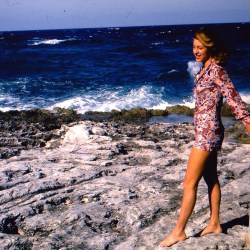
GLORIA RATES MY T & A!

Above photo by Bernard Olcott

As explained in my post SURPRISE!!!, gosh was I ever!  A new step-mom.  I didn’t really get too anxious about meeting my new step-mom because I didn’t have time – it was to be in 3 days!  Her clothes were in the closet.  She had already traveled with Dad to Brazil and Japan.  Silk wedding gowns adorned the walls.

So Gloria joined our small Olcott nuclear family.  This meant that whenever we went out for a road trip, which was often – and something I continue to do to this day between Québec and North Carolina – I had the pleasure of her company in the car.  Gloria was an excellent conversationalist.  And we tested each other right away.

THE HEIGHTS OF THE HELIPORT

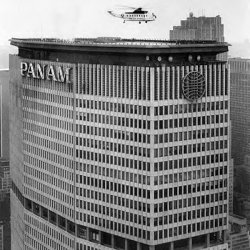
Today, we’ll set the way-back machine to 1965 when I was 7 years old.  My Dad had recently moved into the brand new Pan Am building (today the MetLife Building), his first year sharing space with the Taylor, Scholl, Ferencz, & Simon Law Firm in Suite 3219.  He would move to his own suite the following year.

I have written previously how I marveled at the modernity of the Pan Am building – to me, it was a vision of the future, please see my post DAD’S REAL WIFE.

Feast your peepers on the opening picture above.  Today’s story is about helicopters.

One of the most notable aspects of this building was the roof, which was completely flat except for a small enclosure housing the staircase down to the access gate and lounge.  As Pan Am was the owner, they had an innovative use for that real estate – a working heliport to ferry first-class passengers from midtown to JFK Airport!  Is that completely cool or what?  More lubricating than the switch downstairs from the Lexington IRT Express to the Local, right?

WORKING BIRDS AND THE MASTER FISHERMAN

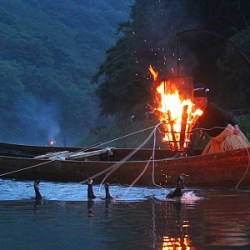
For your Thanksgiving feast today, let me regale you with a story about working birds, not the ones you eat, but the ones that bring you food.  My Dad liked it when people were working.  This apparently applied to birds, too.

He often described to me his visits to Japan and the marvels that he was privileged to witness there.  Obviously, these trips reached him on some deep level.  Looking back, I can piece together several of these sojourns to the land of the rising sun, based on memory and souvenirs.  In my post last week HE WAS RICHLY STUNNED, I recounted how the currency exchange clerk followed him back to his hotel to refund him 50¢ in overcharges.  Dad was not the only one who was touched by his experiences in Japan – Gloria was too, and I will circle back to her at the end of this post.

The Japanese have a custom where they give each other small presents or keepsakes on the occasion of significant meet-ups.  It denotes respect and dignity for the relationship in a culture that is not outwardly expressive of such emotions.  Once, for example, while I was working at Mitsubishi International, my boss’ boss took a personal vacation to Mexico.  On his return, he presented every member of the entire department staff – including me – with a small bottle of Mexican hot sauce.  In fact, the verb in the Japanese language “to give” is hardwired to imply that one gives upwards to the receiver (ie., the giver is small).  Likewise, when you receive a gift, it is understood that you are receiving down (ie., the opposite, the receiver is small).  Harmony and grace are the operative assumptions of a culture where the population is crowded together in large cities and personal space is minimal.

HE WAS RICHLY STUNNED!

There was a knock on the door of a guestroom at the New Otani Hotel in the Kiocho district of Tokyo.  It was early 1971 and Mr. and Mrs. Bernard Olcott were relaxing on their first full day after arriving the day before from JFK.  Dad had just come back to the room.  He had gone downstairs to exchange $80 into yen, the local currency.

“Were you expecting anyone?”  Gloria whispered to Dad.  He shook his head and wandered over to the door.  He had brought Gloria with him to Japan as part of his 1971-72 world tour to roll out his new wife (number 4).  See my post THE BALLAD OF BERN AND GLORIA as to exactly how I had been informed of the new marriage.

There was another quick rapping on the door.  Dad hastened his pace and opened it to see a diminutive bespectacled middle aged woman, bowing profusely.  “Yes?”

She rattled away in Japanese, and with more bowing, gave him a receipt and 60 yen in coins (worth less than 50 cents).  Dad recognized her as the lady at the counter at the Bureau de Change, where he just been not more than 20 minutes ago. 

BALLAD OF BERN AND GLORIA

Remember that scene from “The Wizard of Oz” where, after the tornado, Dorothy gets out of her black and white bed, walks over to the front door, opens it to find the technicolor scene of Munchkin land?

Opening the Door

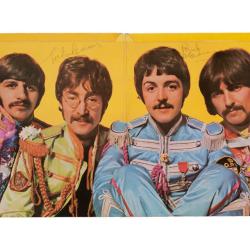
The moment when Dad and Gloria opened the door was kind of like that for me.  As Gloria walked in to say hi, it was very much a wild segue in my life from “On The Waterfront” to “Sgt. Pepper’s Lonely Hearts Club Band,” complete with sitars playing.  Today, I think of that door opening as the transition in my life from ancient to modern times.  All memories before, stained in sepia tones.  And everything afterwards, vibrating colors!  My modern era.  After all, I was 13 in 1971.  On with the show!

I have written earlier that I knew wife no. 2 best because she was my Mom.  Gloria and Rosemary, wives nos. 4 and 5, were modern era experiences for me and I got to know them both very well.  Graciela, at no. 3, was way before, owing to both the shortness of their marriage and to my tender years (though I got to know her better later on).  But wife no. 1 was always shrouded in mystery to me, until I finally met her on Dad’s 95th birthday.

SURPRISE!!!

It was early summer 1971.  School was out.  Time for my annual flight from Orlando to New York, uh, I mean New Jersey.  I rode the plane up North like a nice person (as usual).  Disembarked at the brand new terminal at Newark Airport.  Ran into my Dad’s arms.  We got into the car.  Everything normal.

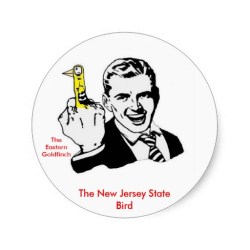
“How was your flight?” Dad asked as he tried to merge into the right lane, some angry driver honking furiously.  I looked to my right to see a cobra-faced man spewing venom in the car next to me.  Reflexively, I turned my gaze away, out the front.  A flock of New Jersey state birds let loose and took to the skies.

“Great,” I lied.  Seventh grade had been a tough year at Trinity Prep School, my new school that year.  What exactly had been “great” was that it was summer vacation and it was over.  On the last day of class, everybody had tossed their books to Hoe Brown, the class beast, who manually tore up each one into several strips of paper.

“How are things with you?” I asked.

Dad grinned.

He ignored my question and said, “I have something to tell you.” He looked at me for a moment.  We had survived the merge okay and were headed northbound on the New Jersey Turnpike, toward the glistening swamps and after that Weehawken.