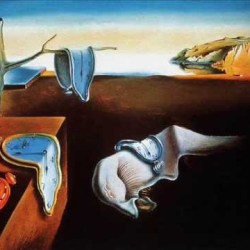
PERSISTENCE OF MEMORY

Most people think that working in a family business is a privileged position.  I can’t blame them for thinking that.  I have the impression myself that many are.

I wish that mine had truly been of that fortunate variety.

But it wasn’t.  My Dad just wasn’t the kind of person that you would want to work with, ever.

It was not solely because he was a nitpicker of the nth degree.  Or a micromanager who would agonizingly complete the job poorer than you.  Generally, such kind of people are insufferable to work with and are to be avoided like the plague.

Sadly, it went beyond that.

Maybe it was all due to his childhood experience of being second-place to an over-bearing older brother.  Or his troll of a father.  A mother who was overwhelmed by trying to shelter that older brother from the fault-finding excesses of her Stalin-duped husband.  Accordingly, one Sunday morning in 1943, she got up out of bed, had a cup of coffee, and expired, all by 11AM!

Could have been just a character flaw, plain and simple.

KANGAROO COURT

Bernard Olcott (my Dad).  Bob Gerhardt.  John Dennemeyer.  Gerald Van Winter.  Ray Chinnery.  These are the founding fathers of the global Patent Annuity industry in the 1960s and 1970s.  And beyond!

Most everyone credits my Dad with being the first to figure out how patent maintenance fees could be tracked and organized by a computer-managed and calendaring program.

All were known for their strong personalities.  Some say you need to be somewhat difficult and egotistical to overcome the inertia of the status quo and take the business world by storm with a new idea.  Certainly this was true for Steve Jobs but maybe not so much for Bill Gates.  Perhaps personality isn’t everything.

Not to say that Bill lacked a strong character, just that he didn’t have the same reputation for going off the rails.  Maybe his penchant for the pleasantries of networking and interpersonal skills of collaboration was truly the road ahead.  I dunno.  I just report.  You decide.

Putting some of these guys together certainly was a recipe for making fireworks.  Apparently, my Dad and Ray Chinnery didn’t mix so well.  If I ever saw them together, it was during a two week period in London over the summer of 1969.  And that was that.  Never again.

HIS NAME WAS BOB GERHARDT

Sometime in late 1984, I drove out with my Dad to Newark Airport in his clunky 10 year old Mercedes Benz, the engine duly defanged so as to economize on the high cost of gas.  Dad wasn’t a great driver.  Driving with him was like taking a safari through cannibal-infested badlands.  His signature move was to pull out into highway traffic much too slowly to the taste of neighboring motorists, due either to the underpowered engine or his “hell-can-care” attitude — pick one.   Invariably, this would provoke generous amounts of honking and obscene gestures.  Massive flocks of New Jersey state birds (“boids”) arose quickly all around us, “wings” fluttering, taking flight quickly into the air.

In other words, New Jersey drivers set their alarms to 3AM so they can wake up and hate that kind of driving.  Across the river in New York, you would likely hear howls of “yer driving be stank, yo!”

Dad loved gratuitous comments about his driving.  NOT.  He certainly wasn’t shy about responding in turn.  Loudly.  Often at those moments, I wished I could disappear.  Or get beamed up.

But this trip to James Riddle Hoffa Memorial Airfield (a/k/a Newark Airport) was not a run-of-the-mill journey.  We were on our way to meet and pick up one Robert B. Gerhardt, a founding father of Master Data Center (“MDC”)¹, a leading competitor to Olcott International.  Bob was a veritable Giant in the Patent Annuity business space.  He was flying in from Detroit to discuss joining up with us.  A strategic spear to be thrust deep into the sides of our competitors, not just MDC, but also CPA and CPI.

MAYBE THERE WAS HOPE!

As relayed in my previous post, “TWO RABBITS, ONE DEAD,” by the early to mid-1980s, the Patent Annuity payment business had evolved to the point where corporate patent owners had lost interest in a basic renewal service. (See my post, “THE BIGGER IDEA (AND ME AS WINGBOY)” for a basic explanation.) What they did clamor for, however, was software to manage their patent files and operations.

These patent departments were awash in paper! They desperately needed to computerize their operations.  By converting paper to electronic files, they could junk their antiquated manual reminder systems. In other words, it was time for them to turn their operations into a modern computer-managed process.

A cheaper and more efficient renewal payment service just didn’t set any bridges on fire anymore.  At least, not like it had in the 1960s. Disruption had moved on.

Dad was extremely resistant to extend the Olcott International brand to a marketable piece of software.  That would have entailed restructuring his business to meet the emerging disruption (please review Rebecca Henderson and Clay Christensen, disruptive innovation experts at the  Harvard Business School).  Dad now confronted the same disruption challenge he had once imposed.  To respond or not; to react incrementally or radically?

disruptive-innovation

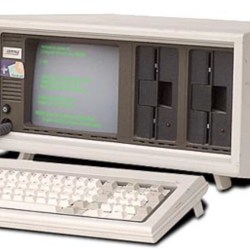
At the time, I was of limited help in addressing this existential threat as I was completely computer illiterate.  We did have some kind of mini-computer in the basement that kept our clients’ patent data on big removable disk drives.  (We had off-site storage facilities to prevent loss from fire, Bigfoot, or nuclear attack).

MY FRIEND IN JERSEY

Astute readers will notice that, in the last few posts, I have been jumping back and forth from the 1980s to the 1990s and back again.  At the core of these stories is my conflicted search to reconcile my Father with the very different man in front of me.  After all, parents are our archetypes.  They are part of us.

I simply couldn’t believe what I was seeing when I started working in the 1980s.  It was convenient to ignore or turn a blind eye to Dad’s episodic incongruent behavior, especially at first.  Back then I was young and inexperienced with no idea of what happens in offices around the world.  People can be strange sometimes and certainly this can be reflected in the workplace.

Now, in 2016, as an IT consultant, I can look back at my career.  I have worked in more than 26 companies from Polo Ralph Lauren to Heineken to AmerisourceBergen to Mitsubishi.  I have had my own desk in Ankara, Tokyo, Sydney, Prestwick, and Totowa (New Jersey).  Without a doubt, what I witnessed in Weehawken during the 1980s and 1990s was truly staggering.  And that’s leaving aside the emotional component that my bullying boss was my cherished parent!  The man who took me to the heights of the heliport, England, and exclusivity.

MENTOR WANTED!

The storied history of Olcott International has been covered in detail over the last year and a half.

As you may recall from my post “THE END OF AN ERA,” the company had its origins when the proposed merger between the British patent leader Marks & Clerk and Bernard Olcott & Associates fell apart in 1969.  The partners of the former founded Computer Patent Annuities in St. Helier, Jersey, Channel Islands. My Dad founded Olcott International in Weehawken, New Jersey.  So it was henceforth a battle of the Jerseys.  Think Bayonne versus Bermuda.  (Rodney Dangerfield once boasted of his summer house in the former).

jerseys

Remember how I wrote that it was Dad’s idea that their proposed joint venture be based in the Channel Islands (to avoid Inland Revenue’s excessive tax rates in the late 1960s)?  The aforementioned partners of Marks & Clerk relocated to picturesque St. Helier setting up shop there (to reduce their tax bite).  One of the partners, Ray Chinnery, has a son my age, Martin who informed me that, thanks to my Father, he grew up in Jersey, not his native Birmingham (England, not Alabama).  Rock fever notwithstanding, Martin still lives and works there!

BUSINESS PARTNERS

The events in my last post, “TWO RABBITS, ONE DEAD,” recount the events of one bleak day in January 1995.

Everyone is entitled to a bad day once in a while.  If those events of 21 years ago had represented just one isolated blip in the story of a triumphal family saga, it wouldn’t have been that big of a deal.

Sadly, it wasn’t just a one-off but was part of a frequently distressing pattern.

It didn’t start off that way, of course, when I began my career at Olcott International a different January a dozen years before that, in 1983.

As I have written in various posts like “SOMETHING ABOUT DAD, PARTS 1 AND 2” and “HEARTBREAKER,” Dad wanted me to join the family business even though various warning signs made me ambivalent toward the idea.  After all, you should always know who your business partners are.  If they’re your parents, you don’t need to do a background check to find out.

As an example, I can perform due diligence in my case by asking a few questions:

TWO RABBITS, ONE DEAD

So after glory on trips away, say in London as described last week in my post “ODD THINGS ABOUT TRIPS,” what was life like back in the office in Weehawken?

The following story sums it up.

One day in January¹ 1995, my Dad and Olcott International CEO Bernard Olcott came down to the second floor, where I was working at the time and insisted to Steve², the lead computer programmer that a granted European Patent be placed in a list (actually, a test database) of payable items as an “EPO item.”  Now, please bear with me on the details that follow; they are important.

The problem was, once a European patent is granted and “goes national,” it is no longer payable as an “EPO item” – it becomes payable at each national patent office, like UK, France, or Germany as a British, French, German item or patent.  Only as a pending application in the European Patent Office is it payable as an “EPO item.”

Just the kind of distinction Dad loved to make.  He prided himself immensely on his profound, perhaps photographic, recall of such details for patent renewals among countries.  After all, he wrote the book on patent renewals!

In this case, though, he was oddly off.  It was unusual, bordering on the weird.

ODD THINGS ABOUT TRIPS

All pictures of holes in hand, Bobby drove us back to Kansas City International Airport for our flight back to Newark.  I remember looking out the window on our descent, seeing only white.  Suddenly, below me, the New Jersey Turnpike appeared in patches out of the murk, looking cloudy, grayish, and flakey.  It was snowing, and it looked like it had been at it for a while.  We were so low over the white roadway, I thought we were going to land on it.

From brown Kansas to white New Jersey.  To be sure it had been a kind of odd-ball trip.  Going to Kansas to take pictures of holes.  More typically, my business trips back then took me to London, which was a very different kind of experience.  For one thing, England (the tourist web site has a page for “things to do on a rainy day.”) is a very “wet” country, and I developed a liking for pints hand drawn from the draught.  No need to buy a membership – everyone was a member!

This post is about England.

THE HOLEY LAND, PART 2

Meanwhile, back in Kansas…

After barking orders to Luke and Roy to fix whatever was wrong with the non-working pump jack, Bobby Edwards proceeded to drive me around southeastern Kansas to the other leases.  As it was a half hour to 45 minutes to any of the others, Bobby and me spent the rest of the week in the truck driving around the stark landscape.

Typically, we would arrive at some desolate farmland, turn off the paved road, and then drive around farm roads for a while, with Bobby looking here and there for familiar markers.  Occasionally, we were at risk for getting stuck in the mud in the middle of nowhere.  If the truck started to slip and spin, Bobby would mutter “cocksucker!” in his raspy voice, jam the truck into reverse, slam back into drive, and rock the truck out of the mud.  The mud, thus insulted, would always relent.  (And I survived to write the tale!)

Then, suddenly, Bobby would say, “We’re here!” put the truck in park, and lurch out of the truck.  I would study the outside, quizzically.  Just empty fields, maybe a tree line marking a boundary.  Then I would hop out and walk around the truck to see Bobby pointing downwards at a hole in the ground.  There would be an eight inch well casing or pipe extending several inches up off the ground. Looking down the casing, it would be just a dark hole running towards the center of the earth; the average depth of oil wells in this area would run maybe 1,000 feet.  Bobby would explain how, to start with, these abandoned holes had to be cleaned out due to “kids throwing stones and bottles down them.”  Once cleared and re-drilled to find the oil reservoir, only then could a pump jack and piping be set up to bring up, hopefully, as the Beverly Hillbillies would say, the “black gold.”

The extraction process had not been started for the first hole.  Nor for about 39 others.