HIS NAME WAS BOB GERHARDT

Sometime in late 1984, I drove out with my Dad to Newark Airport in his clunky 10 year old Mercedes Benz, the engine duly defanged so as to economize on the high cost of gas.  Dad wasn’t a great driver.  Driving with him was like taking a safari through cannibal-infested badlands.  His signature move was to pull out into highway traffic much too slowly to the taste of neighboring motorists, due either to the underpowered engine or his “hell-can-care” attitude — pick one.   Invariably, this would provoke generous amounts of honking and obscene gestures.  Massive flocks of New Jersey state birds (“boids”) arose quickly all around us, “wings” fluttering, taking flight quickly into the air.

In other words, New Jersey drivers set their alarms to 3AM so they can wake up and hate that kind of driving.  Across the river in New York, you would likely hear howls of “yer driving be stank, yo!”

Dad loved gratuitous comments about his driving.  NOT.  He certainly wasn’t shy about responding in turn.  Loudly.  Often at those moments, I wished I could disappear.  Or get beamed up.

But this trip to James Riddle Hoffa Memorial Airfield (a/k/a Newark Airport) was not a run-of-the-mill journey.  We were on our way to meet and pick up one Robert B. Gerhardt, a founding father of Master Data Center (“MDC”)¹, a leading competitor to Olcott International.  Bob was a veritable Giant in the Patent Annuity business space.  He was flying in from Detroit to discuss joining up with us.  A strategic spear to be thrust deep into the sides of our competitors, not just MDC, but also CPA and CPI.

MAYBE THERE WAS HOPE!

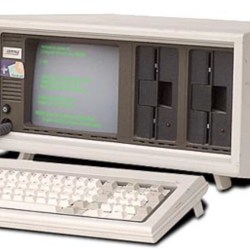
As relayed in my previous post, “TWO RABBITS, ONE DEAD,” by the early to mid-1980s, the Patent Annuity payment business had evolved to the point where corporate patent owners had lost interest in a basic renewal service. (See my post, “THE BIGGER IDEA (AND ME AS WINGBOY)” for a basic explanation.) What they did clamor for, however, was software to manage their patent files and operations.

These patent departments were awash in paper! They desperately needed to computerize their operations.  By converting paper to electronic files, they could junk their antiquated manual reminder systems. In other words, it was time for them to turn their operations into a modern computer-managed process.

A cheaper and more efficient renewal payment service just didn’t set any bridges on fire anymore.  At least, not like it had in the 1960s. Disruption had moved on.

Dad was extremely resistant to extend the Olcott International brand to a marketable piece of software.  That would have entailed restructuring his business to meet the emerging disruption (please review Rebecca Henderson and Clay Christensen, disruptive innovation experts at the  Harvard Business School).  Dad now confronted the same disruption challenge he had once imposed.  To respond or not; to react incrementally or radically?

disruptive-innovation

At the time, I was of limited help in addressing this existential threat as I was completely computer illiterate.  We did have some kind of mini-computer in the basement that kept our clients’ patent data on big removable disk drives.  (We had off-site storage facilities to prevent loss from fire, Bigfoot, or nuclear attack).

MENTOR WANTED!

The storied history of Olcott International has been covered in detail over the last year and a half.

As you may recall from my post “THE END OF AN ERA,” the company had its origins when the proposed merger between the British patent leader Marks & Clerk and Bernard Olcott & Associates fell apart in 1969.  The partners of the former founded Computer Patent Annuities in St. Helier, Jersey, Channel Islands. My Dad founded Olcott International in Weehawken, New Jersey.  So it was henceforth a battle of the Jerseys.  Think Bayonne versus Bermuda.  (Rodney Dangerfield once boasted of his summer house in the former).

jerseys

Remember how I wrote that it was Dad’s idea that their proposed joint venture be based in the Channel Islands (to avoid Inland Revenue’s excessive tax rates in the late 1960s)?  The aforementioned partners of Marks & Clerk relocated to picturesque St. Helier setting up shop there (to reduce their tax bite).  One of the partners, Ray Chinnery, has a son my age, Martin who informed me that, thanks to my Father, he grew up in Jersey, not his native Birmingham (England, not Alabama).  Rock fever notwithstanding, Martin still lives and works there!

BUSINESS PARTNERS

The events in my last post, “TWO RABBITS, ONE DEAD,” recount the events of one bleak day in January 1995.

Everyone is entitled to a bad day once in a while.  If those events of 21 years ago had represented just one isolated blip in the story of a triumphal family saga, it wouldn’t have been that big of a deal.

Sadly, it wasn’t just a one-off but was part of a frequently distressing pattern.

It didn’t start off that way, of course, when I began my career at Olcott International a different January a dozen years before that, in 1983.

As I have written in various posts like “SOMETHING ABOUT DAD, PARTS 1 AND 2” and “HEARTBREAKER,” Dad wanted me to join the family business even though various warning signs made me ambivalent toward the idea.  After all, you should always know who your business partners are.  If they’re your parents, you don’t need to do a background check to find out.

As an example, I can perform due diligence in my case by asking a few questions:

TWO RABBITS, ONE DEAD

So after glory on trips away, say in London as described last week in my post “ODD THINGS ABOUT TRIPS,” what was life like back in the office in Weehawken?

The following story sums it up.

One day in January¹ 1995, my Dad and Olcott International CEO Bernard Olcott came down to the second floor, where I was working at the time and insisted to Steve², the lead computer programmer that a granted European Patent be placed in a list (actually, a test database) of payable items as an “EPO item.”  Now, please bear with me on the details that follow; they are important.

The problem was, once a European patent is granted and “goes national,” it is no longer payable as an “EPO item” – it becomes payable at each national patent office, like UK, France, or Germany as a British, French, German item or patent.  Only as a pending application in the European Patent Office is it payable as an “EPO item.”

Just the kind of distinction Dad loved to make.  He prided himself immensely on his profound, perhaps photographic, recall of such details for patent renewals among countries.  After all, he wrote the book on patent renewals!

In this case, though, he was oddly off.  It was unusual, bordering on the weird.

ODD THINGS ABOUT TRIPS

All pictures of holes in hand, Bobby drove us back to Kansas City International Airport for our flight back to Newark.  I remember looking out the window on our descent, seeing only white.  Suddenly, below me, the New Jersey Turnpike appeared in patches out of the murk, looking cloudy, grayish, and flakey.  It was snowing, and it looked like it had been at it for a while.  We were so low over the white roadway, I thought we were going to land on it.

From brown Kansas to white New Jersey.  To be sure it had been a kind of odd-ball trip.  Going to Kansas to take pictures of holes.  More typically, my business trips back then took me to London, which was a very different kind of experience.  For one thing, England (the tourist web site has a page for “things to do on a rainy day.”) is a very “wet” country, and I developed a liking for pints hand drawn from the draught.  No need to buy a membership – everyone was a member!

This post is about England.

OF GIANTS AND DWARFS

Special note: Today is Dad’s 98th birthday!

As related in my last two posts, “THE NIGHT IS DARK AND FULL OF TERRORS,” and “FIRST TEST,” my full-time entry into the family business was marked by both gloom and doom on one hand, and affirmation on the other.

You could say it was a study of extremes. Like my Dad.

The location of the office was, well, anything but standard.  It was close to my home in Manhattan — five miles as the crow flies.  Just across the river, the first stop.

Yet, it was hideous from the point of view of public transportation.  Two subway lines to Times Square; a bus from the New Jersey Embassy (otherwise known as the Port Authority Bus Terminal); and then a quarter mile uphill slog.  This was a tough commute of one hour’s duration, each way.  It was the Goddamn bus that took the longest, inching its way through hellacious traffic to and from the Lincoln Tunnel.  If I could have walked on water, I could have hoofed the whole thing in just about the same amount of time.

THE INTERSECTION

On West 44th Street in midtown Manhattan, a few doors down from the Harvard Club, stands a stately landmark building.  Designed by the architectural firm of Warren and Wetmore – the same team that did Grand Central Station – the façade features both Beaux-Arts and nautical styles.  Three magnificent windows to the left of the entrance are crafted to resemble the sterns of 18th century galleons.

Lights pour in through those windows to illuminate one of the most curious chambers in the metropolis.  It’s a grand room where more than 150 years of sailing history is preserved.  Specifically, the main exhibit documents the competition for the America’s Cup sailing race from the first event in 1851 up to the present.  In each regatta, a replica of the American boat, known as the defender, (from the New York Yacht Club up until 1983) is presented alongside the main competitor, the challenger, always English (at least at the beginning).  The determining factor for the victor is not indicated but is usually visible.

As long as you know where to look.  Dad did.

THE PROVENANCE OF DILIGENCE

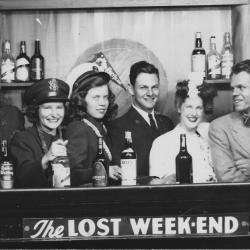
The scenes featuring Gloria in “The Lost Weekend” are said to be shot in PJ Clarke’s bar, still at the corner of Third and 55th, but no longer under the shadow of the El.

It was not “New York’s New Yorkiest” joint, however, as declared by Walter Winchell, the leading radio personality of the 1940s and 1950s. That honor fell squarely on The Stork Club.

Unlike PJ Clarke’s unfortunately, nothing is left today of The Stork. Owner Sherman Billingsley was arguably one of New York’s greatest celebrities from the 1940s and 1950s. Where he once fought union pickets and sabotage, while throwing customers out (who dared to patronize the rival Harwyn club), a peaceful pocket park marks the former location of the famous glitzy eatery and bar.

There aren’t that many relics of old New York left. Probably one of the best “New Yorkiest” venues still in existence is the storied Cooper Union for the Advancement of Science and Art. It’s a puzzling institution in that many New Yorkers don’t seem to know about it. When I asked my Dad where he went to college, he told me proudly “Cooper Union” and when he noticed my quizzical look, proceeded to tell me about it.

THE LOST WEEKEND

The Bernard Olcott Story starts off 2016 with a rewrite of my post “THE LOST WEEKEND” (the original of which I have just removed from this site).  When I wrote “THE LOST WEEKEND” last June, I reminisced about a picture of my Dad hamming it up with several friends in a photo booth heavy laden with cultural significance – see above picture.  All of which was lost to me since I did not grow up in the 1940s.  I shrugged off that photo booth picture, effectively asking if anyone recognized anything about it.  Nobody did.

That photo, it turns out, is a window into the New York City of yesteryear. This essay, and the next three will use the above image as a departure point into a black and white world.  I’ll take you back to New York City of the 1940s, my Father’s formative years as a newly minted Cooper Union graduate, and you’ll:

  • Read about the biggest movie of 1945,
  • Ride the El,
  • Hear old style New Yorkers interact,
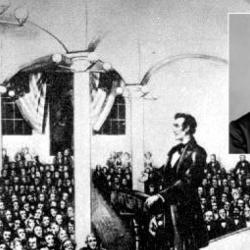
  • Learn a valuable lesson at Cooper Union (a venerable institution dating back to the Lincoln Administration),
  • Review a mysterious death in 1943 with what little facts are available, and
  • Come back to a colorfilled present with a shared activity across time.

Why should you care?  Well, somehow you found this blog.  Perhaps in riding the El with my Dad, you may see some of yours in him.  Maybe you like nostalgic stories about Gotham City which was, in some ways, a completely different city from today’s Big Apple.

It could be that you are intrigued with the backstory of the founding of a business or how the tremendous loss of a parent could leave so little trace behind.  I still haven’t been able to figure out what happened to my paternal Grandmother, who passed away during this era.

Welcome back!