DUEL AND DEATH, THE AFTERMATH

This post continues the story from the last two week’s posts, “MINOU’S PREDICTION” and “REPRIEVE DENIED!

Yoshi marched outside with me hot on his heels. We took our positions out in the middle of Hackensack Plank Road like Hamilton vs. Burr almost 2 centuries before, me facing north, with the actual dueling grounds maybe a half mile away to my right. Yoshi was uphill from me looking south towards “The Shades” neighborhood of Weehawken, always in afternoon shadow at the extreme southern end of the Palisade Cliffs.

Fists raised, we glared at each other.

“C’mon James, take your best shot!” Yoshi taunted, lowering his arms and motioning me to take a swing. We started circling around each other like boxers, ready to land or parry a blow.

REPRIEVE DENIED!

This post continues the story from last week’s “MINOU’S PREDICTION.”

“E-A-S-Y!” I said to Yoshi on the phone, “It’s just a report.”

It was February 3rd, 1994 in Weehawken, New Jersey.  It was rapidly turning into a bad day.

The line was, however, already dead. Behind me, I heard and felt a massive weight flying up the stairs from the basement. In an instant the door burst open, and there was Yoshi in my face, ranting and raving. Again, he repeated the line about me abusing my family name; just because it was “Olcott,” I had the right to treat others poorly.

Strange how that never occurred to me.  If he only knew what my last name really entitled me to!

But how could he, of course?

In any event, I saw an apoplectic 250 pound man in front of me, acting like he just got sprung from Dannemora, smashing his fist in his other hand repeatedly, all the while screaming at me. He wasn‘t just angry. This was harsher than the “if you want my sneakers, take ‘em” stare. This was “your ass, his foot.” I was being threatened.  Physically.

At least, I was used to being shouted at.

MINOU’S PREDICTION

The Adirondack Northway is one of America’s spectacular highways. I’ve driven it many times between New York City and Canada, usually en route to a ski vacation in the North Country.

It winds its way along the foothills of the High Peaks region. If you look over your left shoulder while driving north, you can make out the pyramid-shaped summit of Mt. Marcy looming in the distance, just as Mt. Everest (or Chomolungma, “Goddess Mother of the Mountains” to Mujibhar and his family in Nepal) towers over surrounding peaks on the other side of the world. Eventually, you arrive at the border, where I have already given advice on negotiating customs and border formalities.

Before most remaining gaps in the interstate highway were plugged in the 1960s, if you wanted to drive to Montréal from New York (or Weehawken, for that matter) in the 1950s, you would follow an older (obviously) 2 lane highway called US Route 9 as directed on your foldable Esso highway map (the one that said ‘Happy Motoring’ next to the tiger).

THE CLICK OF MY CAR SEAT BUCKLE

Today’s guest post is written by another grandchild of Bernard Olcott, Grant.  In his essay, Grant sends the entire family up the Highway to Hell, seemingly always on yet another road-trip.  When not working as an investment analyst at Investure, Grant is a college student at Middlebury College.

I love cars. Well, I should rephrase that. I don’t know all the parts or mechanics of the automobile. I can’t say I have a clear picture of the new Ford Fusion in my mind. I’ve never been to a car show, and I’m only starting to understand the difference between a BMW and a Benz.

So why do I love cars? I love being inside them. I love the warm intimacy such an enclosed space creates between two people. I love the thrill of reaching a destination, the fighting over the radio station, the comfort of drifting in and out of a drowsy sleep in the back seat, and, especially, the long meandering talks, spur-of-the-moment debates, and random lectures shared among the four seats that draw my family closer and closer together with each click of the odometer.

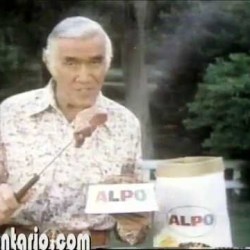
ALPO’S APPEAL

Once in a purple moon, we had a new hire. Like the time I had to (extremely) vet my own replacement, Paul Campo, in 1986.

Do I just train someone who was going to be taking my place and throw him to the wolves?  Many of my readers would be quick to answer, “Yes!”

However, that is a sure way to run low on wolf chow.  I always thought that hurling virgins into volcanos was a much better path to karma.

But I digress.

For the love of Pete, I owed it to Paul to explain or at least give him a brief warning about Dad’s “quirks,” to put it mildly. Even though I had not yet worked in many different work environments, I knew intuitively that bosses don’t typically act like my Dad did normally.

Don’t get me wrong. There are plenty of bad bosses out there. The ones that do things behind your back, and then have the nerve to call you “sneaky.” Or the screamers. Or maybe a good boss one day turns bad the next. A good boss will always be happy to discuss anything with you — after all, information is their currency in trade. But what if they deny a meeting request to consider some changes because they “had already discussed it with you.”  Really?  Not so good.

JOB WELL DONE. NOW STOP!

By 1994, I was not only loading patent data into 3 different Patent Management Systems (“PMS”) – one for DOS, a second for Windows, and a third for Mac – and going on the road to demo them, I was also seeking ways to leverage business trends of the day to the marketing advantage of Olcott International.

However, as my readers well know, I operated under some daunting limitations – I knew that if I went out on a limb in terms of my non-existent authority, I could be subjected to painful rebukes in front of the employees. My last name offered me no protection from the boss; it merely singled me out for extra abuse. After all, the family name didn’t save anybody from getting trolled in Jamaica (Queens, not the West Indies) in the 1920s, 1930s, or afterwards. Not by a long shot.

Getting poorly paid to do little in your job is akin to a short-term stay in a shabby motel room on the outskirts of Hell. You don’t know when or to where they will move you, but you’re sure to like it less.

ENVIABLE PATENTS

As discussed in the comments section last time, the problem with my Mom’s and Grandmother’s “invention” back in the late 1980s was that it wasn’t an invention. It was just an idea, which cannot be patented.

All patents start with one, of course.

Dog waste on the streets of any big city, like New York, is a very special problem in the summer time, when the city becomes a tropical “paradise,” albeit with world-class dining and entertainment, together with daily bus tours.  Before the “pick up after your pooch” laws were enacted some 15 years ago, the heat could “cook” the waste, rendering the streets virtually unpassable to pedestrians. Except for real New Yorkers, of course!

As one reader, or expert, commented two weeks ago, dog waste will naturally decay into dust. But this process can take weeks, which would seem like centuries to New Yorkers. The public interest is to get rid of it instantly. It would be possible, for example, to torch it with flame throwers, but this could introduce new, stranger, potentially unsafe possibilities.

PATENTS, MANAGEMENT, AND PROJECTS

(Not necessarily in that order.)

One day in 1993, my Dad came downstairs to the “computer department” at Olcott International somewhat agitated. He was upset that a function called “Prior Art” was not included in the patent management software. There were plenty of blank looks all around. “Prior Art? What’s that?” and “Why didn’t we know about this before?” were suddenly questions that hung in the air like old party balloons.

“You dumb bastards!” Dad shouted at the programmers. “You don’t know anything about patents!” At least not like him; after all, he was a high priest, a “made” patent attorney.

Bob Gerhardt took a shot at resolving the problem. “Bern,” he grunted as he worked that wad of gum in his mouth, “We can add Prior Art information in the header text field.” Reasonable, that.

Dad shot back, “Is it labelled ‘Prior Art’?” Although his knowledge of software was surprisingly spotty, he knew full well the answer to that question.

Bob grunted again, softer this time, “no.” He was beaten, again.

CUTTING EDGE AND TOTALLY COOL

Astute readers may recall my post, “A MAN OF LETTERS,” from August 2015. One of the points of the story was to explain my Dad’s preferred method of marketing Olcott International in the late 1980s and early 1990s. It wasn’t by way of a sophisticated advertising mix. After all, this wasn’t a service you could promote via highway billboards (not that that qualifies, but never mind).

The market for patent renewal servicing worldwide in countries from Nicaragua to North Korea (yes, there are a handful of foreign companies that register patents in North Korea!) was and still is not so big. It mainly consists of a tiny cadre of people working in large corporate legal (or more specifically, patent) departments. And the person calling the shots in such rarefied zones is none other than a pooh-bah called a “Chief Patent Counsel.”

That preferred marketing methodology referred to above was – wait for it – by direct snail US mail to every pooh-bah you could shake a stick at. He or she received a personally addressed letter through the miracle of mail merges via MS Word. Windows version, natch!

WHAT’S IN A BORDER?

Today, folks I run my first repeat.  Forget USA vs. Russia!  This post concerns the ongoing war between New York and New Jersey and is the all-time favorite among my readers (more than 1,000 views!).  Please share among your nutty friends who have a stake in this idiotic war!

North of the Rio Grande River is a huge expanse of North America divided up into 49 states, 10 provinces, 3 territories, and 1 district.  Just about everywhere, the dividing lines are sleepy affairs.  No fences to block your way.  With a flashlight, you might find a surveyor’s marker under a bush assuming you knew where to look.  Typically, a sign is erected on the “border” welcoming you to the new jurisdiction.  Some places have signs to serve the opposite purpose, that is to say farewell to the hapless traveler.  In the Southern United States, it is possible to see a sign with the information “You are now leaving Bucksnort, Hurry Back!”

Technically, the most severe crossing is the one between the United States and Canada.  When Mrs. Findlay F. Traveler from the US drives over that line, she can expect to be interrogated by overly inquisitive Canadian custom agents eager to ascertain just exactly how many bottles of liquor and cartons of cigarettes are stashed in the trunk.  Any kind of vague answer will trigger an immediate request to pop that puppy open.  A precise inventory will be taken and the requisite CDN $38.50 levy lifted from the traveler’s credit card.  This interrogation is also offered in French as a sucker ploy.  If Mrs. Traveler chooses (poorly) to respond to any question using her middle school French, the agent’s eyes will harden with suspicion and the customs’ duty tagged with a 12% nuisance surcharge.  It has nothing to do with us in the US; it’s related to some kind of internal trauma up there.  It’s best to answer everything in English taking care to ask if the border station has a gift shop where you can buy the moose tee shirt.  Knowing the system thusly, you can be waved through in under 60 seconds.

Driving back into the US on the other hand is a quick passport sniff to insure that you are really from one of the 63 entities mentioned above (or Hawaii and a few other scattered islands).

All of this is relevant to The Bernard Olcott Story because of one peculiar exception to this peaceful patchwork littering the landscape from the Atlantic to the Pacific.  One border where the crossing is associated with profundity from a logistical, emotional, and psychic (perhaps even psychotic) point of view.