FIRST TEST

As I took my seat behind that wooden desk on the lower level in 1982, I began my training at Olcott International.

As discussed in numerous posts, Olcott International operates in a highly specialized field, one that most people do not understand.  My Dad had started his business in 1961 on the back of an advanced (for its time) computer program that could sort patent renewal data.

He offered this service to corporate patent owners that had live dockets of hundreds or thousands of registrations. Most of these required annual payments to maintain their validity. (Patents in the USA follow an extremely odd payment schedule, however).  After the 20th year, the patent would come to term and fall into the public domain, meaning that anyone could read the patent, make the thing (whatever it was), and sell it for a buck.

Generally, whenever I met people socially, and the conversation turned to work, describing this computer and legal-driven business quickly became a problem.  Most people have professions that can be easily pigeon-holed in simple terms, like “banker,” “teacher,” or “forklift driver.” Not I. In fact, it got so tedious for me to explain what I did for a living, I would typically bail and offer up that I was simply the hostess’ psychiatrist. Sometimes, I would even be asked if I was taking on new patients. I always made sure that I was available only on the most unsuitable night.

There are patents for all kinds of things. Some vital, like certain AIDS medications. Many are frivolous, like weird ribbing patterns on a condom. Most are a waste of money, patented by individuals for products with no commercial potential.

On the other hand, successful corporations, eg. Apple Computer, have dockets comprising thousands of valuable, revenue generating patents. Every one of them worth the $2,000 annual cost of renewal (thereabouts) annually in over 100 countries across this beautiful planet.

So what was the essence of my first job with Olcott International? Patents? No!

THE NIGHT IS DARK AND FULL OF TERRORS

“What did he fear? It was not fear or dread. It was a nothing that he knew too well. It was all a nothing and a man was nothing too. It was only that and light was all it needed and a certain cleanness and order. Some lived in it and never felt it but he knew it was already nada y pues nada y pues nada. Our nada who art in nada, nada be thy name thy kingdom nada thy will be nada in nada as it is in nada. Give us this nada our daily nada and nada us our nada as we nada our nadas and nada us not into nada but deliver us from nada; pues nada. Hail nothing full of nothing, nothing is with thee.”

-Ernest Hemingway, “A Clean, Well-Lighted Place”

In 1982, Dad was suing Gloria for divorce.  Or more accurately, he forced her to sue him.  As the defendant, he and his lawyers threatened her with an illegal prior divorce and effectively slaughtered her (see my post last week “IS YOUR MEXICAN DIVORCE LEGAL?”).

During that Fall, I started working at Olcott International part-time, one day a week, on Fridays, when I had no classes at Columbia University’s Graduate School of International Affairs (SIA).  It was the last in a string of temporary or part-time jobs held down since my last year of college in 1980.

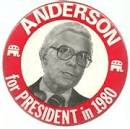
As a college senior, I created a job for myself as an organizer for Teddy Kennedy’s presidential campaign in 1979 and 1980.  Teddy didn’t win, as you recall.  Then, I worked as the New York State College Coordinator for John Anderson’s Presidential campaign in the Fall of 1980.  John didn’t win either.  Later on, at SIA, I had summer jobs at Société Générale and the United Nations.  Great experiences all.

John Anderson

The highlight of my experience in John’s campaign was when he took the time to call me one day to thank me for my efforts.

But now Dad had offered me full-time employment at Olcott International starting January 1983.  This was to be my first time working in a job for a paycheck.  To be supporting myself like a real person.

As mentioned in previous posts, I had my reasons to be nervous.  The puffed-up title of Assistant Vice President did little to assuage my concerns.

PAYING THE COST

A reader commented last week “James, you had a very difficult childhood/teenage. Your father obviously had some issues.”

I disagree with the first statement.  Leaving aside the fact that my Dad had divorced and remarried twice by the time I reached my 18th birthday, I think my childhood was often charmed, even privileged.  As you can see from my picture in last week’s post “WHEN A CHORE IS NOT A CHORE PART 2,” Dad and I had a lot of fun together.

The Father who took that picture is the man I miss terribly today.

It was only in my later adolescence that ominous signs about Dad became known to me from the new vibrant presence in our lives, Gloria.  Like any child, I refused to believe at first that my Dad could have had issues.

HEARTBREAKER

July and August 1992 were interesting times at Olcott International.  I was busy coordinating marketing activities with fellow employee Peggy.  My sister Blair also joined the company for a couple of weeks as she was out of college for the summer; I welcomed her company in yet another attempt to curtail or document Dad’s occasional onslaughts of wild behavior.

Like the time in July 1989 out of the blue one morning he assigned at the last minute a “chore” for me: move 25+ heavy (40 pounds each) 3 x 3 stacks of heavy tiles around the family summer house in Shinnecock Hills, Long Island.  It was beyond my ability.  But no matter.  Later that afternoon, he hunted me down at a friend’s house by telephone to tell me I was disinherited.

Dad was like that.  Apparently, it ran in the family.  Remember my Uncle Ed who out of the blue would also assign overbearing tasks to my cousin Billy and berate him if left uncompleted?

But back to Peggy.  She was a good soul who had a lot of previous experience with legal software and easily did her share of (in this case appropriate) heavy lifting in terms of marketing and support.  At the time, Olcott International sold various versions of patent management software, including ones for DOS, Windows, and Mac!  I learned, and trained clients in, all of them.

The Mac version was a real curiosity.  No one else had it!  Apple’s patent department in Cupertino was definitely intrigued; apparently, they were managing their patent data on a Windows platform, much to their and Steve Jobs’ chagrin.

But in the middle of this patent management business drama appeared a man much like Huntington Hartford or Bobby Edwards.  Out of the blue and completely unexpected.

But in this case, Dr. Wilson Greatbatch was the real deal.  An inventor’s inventor.  The man who had created the pacemaker and who was now going to cure AIDS.  What was he doing in the Weehawken, New Jersey offices of Olcott International?

THE INTERSECTION

On West 44th Street in midtown Manhattan, a few doors down from the Harvard Club, stands a stately landmark building.  Designed by the architectural firm of Warren and Wetmore – the same team that did Grand Central Station – the façade features both Beaux-Arts and nautical styles.  Three magnificent windows to the left of the entrance are crafted to resemble the sterns of 18th century galleons.

Lights pour in through those windows to illuminate one of the most curious chambers in the metropolis.  It’s a grand room where more than 150 years of sailing history is preserved.  Specifically, the main exhibit documents the competition for the America’s Cup sailing race from the first event in 1851 up to the present.  In each regatta, a replica of the American boat, known as the defender, (from the New York Yacht Club up until 1983) is presented alongside the main competitor, the challenger, always English (at least at the beginning).  The determining factor for the victor is not indicated but is usually visible.

As long as you know where to look.  Dad did.

LAST CALL FOR EDWARD

Sun.  Sea Spray.  Hull smashing through rows of swells.  The ship’s deck heaving from and dropping into an endless parade of oncoming waves.  Turn your face towards the sun and catch a million dancing reflections on the water glistening back at you.

If you’re on a sailboat, there is no engine noise, just the sound of wind blowing through your hair.

Both Olcott brothers were watermen, even though they were descendants of the landlocked Dzūkija region of Lithuania.  I am a waterman too, raised on many afternoons of sailing on Shinnecock Bay, Long Island during my young summers in the 1960s with my Dad.

However, by the age of twelve, I had discovered a simple way to elevate the pleasure and excitement of wind, sea, and waves.  Instead of being on a boat in the water, how about doing away with the boat?  Watch sets of giant waves roll in while at sea level, exactly.  Body surfing.  Maximum exposure.  If you could time and catch them right, you could slide down a crystal slope while the tube of water breaks above and behind you.  The payoff is maybe eight seconds of pure exhilaration that seems to last perhaps up to half an hour.  You’ll never forget the view of giant slopes of water marching towards you, with the last wave looming higher over the others.  That last one, with the face of the sun sparkling back at you, will be the wave you want.  And sometimes, it will take a fair amount of courage to try to pick off that last wave, the king of the set.

But this was me in the water, maybe 30-50 yards away from the shore.  Both my Dad and his Brother crossed the oceans – what about seeing rogue waves 3,000 miles offshore?  I shudder to think what they must have gone through.

BOOMERANG RETURNS!

Today the Bernard Olcott story returns to Vilnius, May 1985.  From my post “BOOMERANG THROWN,” you learned that I was in Lithuania for 5 days that year, hunting down my family roots.  The first day was remarkable.

My second day in Lithuania featured an old fashioned get-on-the-bus touristic outing with my Intourist group.  The destination was the town and castle at Trakai, about 30 km to the west of Vilnius.  Built in the 15th century as the home to the Lithuanian Grand Duke, it was considered as the unofficial capital of Lithuania, which, as part of the united Polish-Lithuanian kingdom, stretched from the Baltic to the Black Seas in its prime.  Today the ancient castle is in good condition – for a structure that is 600+ years old – and is scenically located on an island in a pristine clear water lake.

BOOMERANG IN THE AIR FROZEN


This blog ostensibly concerns my Father, Bernard, who passed away in 2006.  But I take many diversions along the way.  Today’s post is mostly about his 2nd wife, my Mom.  She is a spry 83 year old woman who brags about her ability to walk around the parking lot in front of her Assisted Living Residence “23 times” every day.  She is very specific about that number.

OK, so what do you do with your aging Mother when you bring her home for the weekend?  In my case, I take her for long walks.  Makes sense, right?

This past Sunday, I brought her and my cousin, Lise (visiting from Quebec City), for an excursion to the Four Freedoms Park on Roosevelt Island.  It’s a stunning modern memorial to, in my opinion, the greatest President of our Republic.  Our very own Great Leader, the handicapped patrician who led our country through its darkest hour to supreme victory and ascendancy to superpower status, militarily, economically, and culturally.  FDR.  Now we have a Washington, DC-style monument in his honor, right here in the middle of the East River.

THE NEW BUSINESS OF PATENT ANNUITIES

Above: Lincoln’s Inn as seen from Lincoln’s Inn Fields, London.

Up for today is my Harvard Business School (“the charm school on the Charles”) case study about the industry my Dad created — international patent renewals!

As the 1960s progressed, Dad’s new business quickly subsumed his “normal” patent practice. He did keep working for some select inventors who intrigued him but spent most of his time promoting his new renewal business as a modern, computerized clerical operation.

Corporate patent owners were delighted and sought him out.  On the other hand, foreign patent law firms worldwide were scandalized! The renewal work for them was heretofore easy money; it was a simple annual reminder operation that brought in huge fees for little work. They accused Dad of skimming the cream off their businesses. Many fought back, in some cases by petitioning their local patent offices NOT to accept such payment schedules sent in from foreign offices in New York. However, some savvy patent law offices quietly became clients, preferring to take advantage of the lower fees and passing them along to their clients to curry favor.

THE BIGGER IDEA (AND ME AS WINGBOY)

So Dad got the idea for a fantastic business related to patent filings and infringements, kind of an amalgam between legal and IT but not a legal practice, strictly speaking.   As I am able to remember it, he had become friendly with Ed Greer, who was head patent counsel for the Union Carbide Corporation. Union Carbide was one of the biggest chemical corporations of the day and was headquartered in their own magnificent skyscraper two blocks up Park Avenue from the Pan Am Building.

It was a probably a simple matter for Dad to put it together that large corporate patent owners could benefit from some form of computer calendaring.

Keep in mind that a large company like Union Carbide owned a large portfolio of patents. They would initially file patent applications in the home country, USA for Union Carbide. And as they were a large multinational corporation selling their wares everywhere, once the patent applications were accepted here at home, they would then engage in an international filing program elsewhere, typically the largest 15 countries in Western Europe and then Canada, Japan, Australia, New Zealand, and maybe Brazil and South Africa to boot.